Beyond the Hype: 5 Quantum Computing Applications Delivering Measurable Results for US Enterprises Right Now
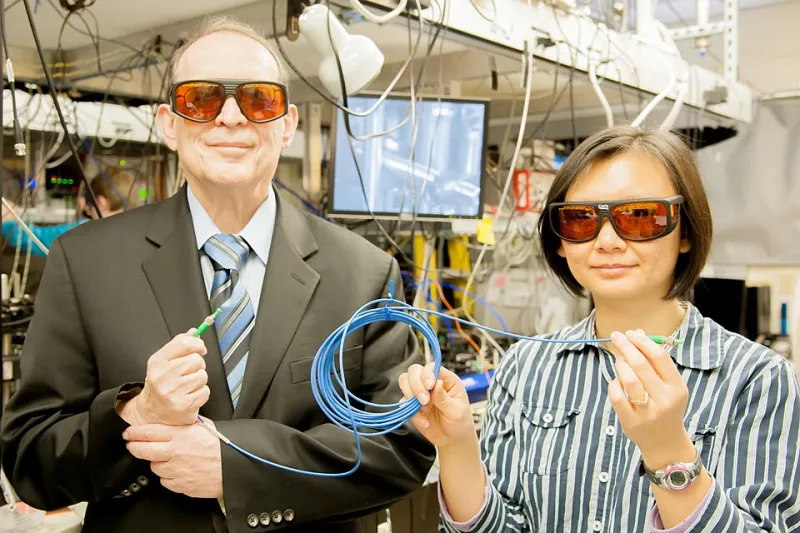
Photo: U.S. Army CCDC, CC BY 2.0, via Wikimedia Commons
Quantum computing occupies a peculiar position in the technology landscape: simultaneously overhyped in popular discourse and underappreciated in its genuine near-term utility. The popular narrative — quantum computers will instantly break all encryption and solve every optimization problem — obscures a more nuanced and, in some respects, more interesting reality. Quantum systems are not general-purpose replacements for classical computing infrastructure. They are specialized accelerators, extraordinarily powerful within specific problem domains, and those domains are beginning to yield commercially relevant results.
For enterprise technology leaders, the relevant question is no longer "when will quantum computing matter?" It is "where is it already mattering, and what does that mean for our organization's roadmap?" The following five application areas represent the current frontier of practical quantum value — grounded in documented deployments and measurable outcomes as of 2024–2025.
1. Drug Discovery: Compressing the Molecular Simulation Timeline
Pharmaceutical research has long been constrained by the computational cost of simulating molecular interactions at the quantum mechanical level. Classical computers approximate these interactions using methods that become exponentially more resource-intensive as molecular complexity increases. Quantum processors, by contrast, operate natively within the quantum mechanical framework — making them theoretically well-suited to this class of problem.
In practice, companies including IBM, Google Quantum AI, and specialized quantum software firms such as QSimulate and Quantinuum are partnering with major pharmaceutical organizations to accelerate specific stages of the drug discovery pipeline. The focus is currently on molecular property prediction and protein-ligand binding simulations — tasks where quantum-assisted approaches can reduce the computational time required from weeks to hours for certain molecular configurations.
Merck and Pfizer have both disclosed active quantum computing research programs targeting early-stage drug candidate screening. While full quantum advantage over classical high-performance computing has not yet been demonstrated for the largest molecular systems, the trajectory is clear: as qubit counts and error correction capabilities improve, the pharmaceutical industry stands to be among the earliest beneficiaries of practical quantum acceleration.
What IT leaders should know: Quantum readiness in pharma begins with data architecture. Organizations that structure molecular simulation workflows to interface with quantum APIs today will be positioned to scale those integrations as hardware matures. Hybrid classical-quantum pipelines — not pure quantum deployments — are the near-term implementation model.
2. Supply Chain Optimization: Solving Combinatorial Problems at Scale
Logistics and supply chain optimization present a category of computational challenge that classical algorithms handle imperfectly: combinatorial problems in which the number of possible solutions grows factorially with problem size. Routing a fleet of 500 vehicles across a dynamic network, optimizing warehouse slotting across thousands of SKUs, or scheduling production across a multi-plant manufacturing operation all fall into this category.
D-Wave Systems, operating from its US commercial presence, has been the most prominent quantum annealing vendor targeting supply chain optimization. Volkswagen's traffic flow optimization pilot — which used D-Wave hardware to route buses across Lisbon — demonstrated measurable improvements in routing efficiency compared to classical heuristics. More recently, logistics firms including Airbus and several US-based third-party logistics providers have run quantum optimization trials for cargo loading and route planning.
The current limitation is problem size: quantum optimization hardware can handle constrained versions of real-world logistics problems, but the largest enterprise-scale problems still exceed current qubit capacity. The practical approach involves decomposing large problems into quantum-tractable sub-problems, solving them with quantum or quantum-inspired algorithms, and integrating results into classical planning systems.
What IT leaders should know: Quantum-inspired algorithms — classical algorithms designed to mimic quantum optimization approaches — are available today on conventional hardware and can deliver meaningful improvements without requiring quantum hardware access. Evaluating these tools is a productive first step toward quantum-readiness in supply chain contexts.
3. Financial Modeling: Monte Carlo Acceleration and Portfolio Optimization
Financial services represent one of the most computationally intensive industries in the US economy. Monte Carlo simulations — used extensively in risk modeling, derivatives pricing, and portfolio stress-testing — require enormous numbers of iterative calculations to produce statistically reliable outputs. Quantum amplitude estimation algorithms offer a theoretically quadratic speedup over classical Monte Carlo methods, a potential advantage with significant practical implications for trading desks and risk management teams.
JPMorgan Chase has been among the most transparent US financial institutions in disclosing its quantum computing research. The firm's quantum research team has published work on quantum algorithms for option pricing and portfolio optimization, and has maintained active partnerships with IBM Quantum and other hardware providers. Goldman Sachs has similarly invested in quantum research capabilities, with a focus on derivatives pricing acceleration.
As of 2025, these applications remain in the research and early-pilot phase for most financial institutions — the qubit quality and circuit depth required for quantum advantage in large-scale financial modeling have not yet been consistently achieved. However, the algorithms are validated, the use cases are well-defined, and the organizations best positioned for rapid deployment are those building quantum literacy within their quantitative research teams now.
What IT leaders should know: The talent dimension is the critical constraint. Financial organizations that are recruiting or developing professionals with quantum algorithm expertise today are creating durable competitive advantages that will compound as hardware capabilities improve.
4. Materials Science and Battery Technology: Accelerating the Energy Transition
The clean energy transition depends critically on advances in materials science — particularly in battery chemistry, photovoltaic efficiency, and industrial catalysts for hydrogen production. Each of these research domains involves the simulation of complex quantum mechanical systems that strain classical computational methods.
Quantum computers are being applied to simulate the electronic structure of novel battery cathode materials, with the goal of identifying candidates that offer higher energy density, faster charge cycles, and longer operational lifespans than current lithium-ion chemistries. IBM and Microsoft have both highlighted materials simulation as a priority application domain, and startups including QC Ware are developing quantum chemistry software stacks specifically designed to accelerate this research.
ExxonMobil has partnered with IBM Quantum to explore quantum simulation for carbon capture chemistry. The US Department of Energy's national laboratories — including Argonne, Oak Ridge, and Lawrence Berkeley — are integrating quantum computing resources into their materials research programs, supported by federal investment through the National Quantum Initiative.
What IT leaders should know: For organizations in energy, automotive, or advanced manufacturing, monitoring the quantum materials simulation space is strategically relevant. Breakthroughs in this domain will propagate rapidly into product development timelines across multiple industries.
5. Cybersecurity: Preparing for Post-Quantum Cryptographic Standards
The cybersecurity dimension of quantum computing differs from the preceding applications in a critical respect: it is not about quantum systems delivering new capabilities to enterprises, but about quantum systems eventually threatening the cryptographic foundations that enterprises currently rely upon. The threat is not imminent — cryptographically relevant quantum computers capable of breaking RSA-2048 encryption are estimated to be years to more than a decade away — but the preparation timeline demands action now.
The National Institute of Standards and Technology (NIST) finalized its first set of post-quantum cryptographic standards in 2024, providing US organizations with the algorithmic foundation for migration planning. Federal agencies are operating under mandates to inventory cryptographic assets and begin migration planning. Private sector organizations, particularly those in financial services, healthcare, and defense contracting, are following suit.
The practical challenge is the scale of cryptographic infrastructure embedded across enterprise systems: TLS certificates, VPN configurations, code signing processes, and hardware security modules all require evaluation and, in many cases, replacement or upgrade. This is a multi-year engineering program, not a software update.
What IT leaders should know: "Harvest now, decrypt later" attacks — in which adversaries collect encrypted data today intending to decrypt it once quantum capabilities mature — are a present-tense threat for organizations handling long-lived sensitive data. Cryptographic agility and post-quantum migration planning are not future concerns. They are current operational priorities.
The Quantum-Ready Organization: A Framework for Action
Across these five domains, a consistent pattern emerges: the organizations capturing early quantum value are those that invested in quantum literacy, algorithm development, and hybrid classical-quantum architecture before quantum hardware reached commercial maturity. The technology is advancing faster than most enterprise planning cycles anticipate.
Quantum readiness is not about purchasing quantum hardware or deploying quantum applications at scale today. It is about building the organizational knowledge, data infrastructure, and vendor relationships that will enable rapid capability deployment as the technology crosses successive performance thresholds. For engineering and IT leaders, the window to build those foundations at low cost and low urgency is narrowing. The practical turning point is not a single moment — it is a progression already underway.